|
|
|
| Activity |
Best Regions / Peaks |
Season / Conditions |
Tips & Considerations |
| Hiking & Backpacking |
White Mountains (NH), Green Mountains (VT), Katahdin (ME), Taconic peaks (MA/VT/NY), smaller ridges (CT, MA) |
Summer through early fall are best for most trails. Alpine zones may have snow or harsh weather well into late spring. Be prepared for rapidly changing weather in higher elevations. (Wikipedia) |
Use maps, gear for weather; if hiking high peaks, bring layers, water, navigation; get permit info where required (e.g. Baxter State Park). |
| Winter Sports & Snow |
Ski resorts (Killington, Stowe, Sugarloaf, White Mountain resorts), backcountry skiing. |
Snow season usually from late fall through early spring, depending on elevation & latitude. Winter access is harder; road closures or snowpack can limit trails. (PeakVisor App) |
Use proper gear; avalanche awareness in some places; check trail / snow conditions; guided trips if unfamiliar. |
| Scenic Drives & Fall Foliage |
Kancamagus Highway (NH Whites), drives through Vermont via Route 100, roads around the Berkshires, roads to Katahdin, etc. |
Mid-September to October is prime foliage time. Best windows vary by elevation and latitude. |
Plan lodging ahead (fills up fast in foliage season); expect crowds; drive slower, stop at overlooks; check foliage reports. |
| Camping, Cabins, Forest Walks |
All major mountain forests (White Mountain NF, Green Mountain NF, Baxter State Park, MA state parks) offer campgrounds, lean-tos, cabins. Also smaller parks or protected lands in MA/CT. |
Late spring through early fall; shoulder seasons (late May / early June, September) often lovely but weather more unpredictable. |
Advance reservations help; bring gear for sudden cold; note regulations and permit/trail-use rules. |
| Climbing & Mountaineering |
White Mountains have technical routes, ice climbs (Cannon Mountain, etc.); Katahdin has Knife Edge route; rock climbing in smaller ridges; mountaineering challenges. |
Summer for rock, late spring / early fall for mixed ice; winter for serious climbs but high risk. |
Experience needed; check local climbing guides; safety crucial; avoid routes when conditions are bad. |
| Wildlife, Flora, Unique Natural Features |
Alpine tundra (on top of Washington, Katahdin, Mansfield), rare plants, bird migration, moose & deer in Maine, etc. Also geological features like cirques, talus slopes, cliffs. |
Late spring / summer for plants; wildlife may be more visible in dawn/dusk; insect season in summer; harsh conditions at high elevations. |
Stay on trails to protect fragile alpine zones; know wildlife safety; carry binoculars & field-guides; leave no trace. |
New England's Mountains Part II
The Geologic Story: Why New England Looks Like This
- New England's mountains are old. Very old. We're talking hundreds of millions of years of collisions, uplifts, and erosion. Some big themes:
- Appalachian Orogenies: Multiple mountain-building events (Taconic, Acadian, etc.) that folded, metamorphosed, uplifted bedrock.
- Volcanic arcs & accretions: Parts of Vermont and Massachusetts came from island arcs or microcontinents colliding with proto-North America. These pieces got added ("accreted"), creating complex geology.
- Intrusions: Granite plutons, magma intruding into older rock, cooling slowly underground, later exposed. E.g. the White Mountains have significant granite; Katahdin is a granite intrusion.
- Glaciation: In the Pleistocene, glaciers covered the region, scouring valleys, rounding peaks, forming U-shaped valleys, depositing moraines, creating cirques (especially in the White Mountains). This left lots of alpine features, tarns, rocky ridges.
- Erosion over time: After the mountain building ceased, millions of years of weathering wore much down. What remains are the cores, ridges, and sometimes resistance rock (like granite) standing high while softer rock eroded away.
- Because of that, many of the highest peaks are quite old; the ranges are rugged but not extremely sharp like very young mountain chains (e.g. the Himalayas). Also, your climate, flora, fauna are strongly influenced by this geology.
History & Culture of the Mountains
- These mountains are more than geological features:they have layered stories.
- Indigenous peoples: Abenaki, Penobscot, Wabanaki and other Native American tribes used these lands for hunting, shelter, spiritual places & as seasonal routes. Names of peaks (Katahdin, Mansfield's Abenaki name, etc.) reflect that heritage.
- Colonial & post-colonial era: Colonists & early settlers used the mountains for timber, logging, as barriers / routes. New England's mountains also featured in operations like building roads, railroads, where feasible (Cog Railway, etc.). Huts, trail building, early tourism in the 1800s.
- Literature / Art / Culture: Mountains in New England appear in literature (Thoreau, Emerson), art, folklore. The identity of towns often tied to nearby mountains. Fall foliage lore, autumn drives etc. The wildness of the Whites, the calm of Vermont's hills:all part of what draws artists, writers, musicians.
- Conservation history: Many of the higher peaks and large parcels became protected as forests, state parks, and national forests. E.g. White Mountain National Forest, Baxter State Park in Maine, Mount Mansfield State Forest in Vermont. Conservation of alpine zones is an ongoing concern. Also issues of climate, human impact, etc.
Interactive Gallery
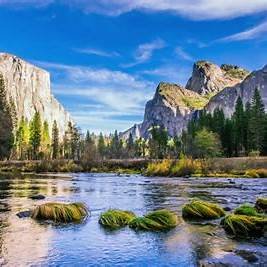
Yosemite Valley
|
|